Workplace Cleaning – The Do’s & Don’ts From The Professionals
Keeping your workplace clean is essential for maintaining a safe and healthy work environment. Here are some tips for keeping your workplace clean:
Do’s:
Develop a cleaning schedule and stick to it
Regular cleaning will help prevent the accumulation of dirt and grime that can lead to health problems. Developing a schedule will ensure you keep up to date with what needs to be done, and will keep your employees aware of what is required.
Use the appropriate cleaning supplies for each task
Use the right cleaning supplies for each task. For example, use a disinfectant to clean high-touch surfaces and a glass cleaner for windows. Failure to do so could lead to injury or damage to surfaces. Using the appropriate cleaning supplies will shorten your cleaning time too!
Encourage employees to take responsibility for keeping their work areas clean
Encourage employees to take responsibility for keeping their work areas clean. This can include wiping down their workspace at the end of the day and properly disposing of trash.
Provide employees with the necessary cleaning supplies
Provide employees with the necessary cleaning supplies to keep their workspace clean, such as paper towels, disinfectant spray, and trash bags.
Plan for regular deep cleaning of the workplace
Plan for regular deep cleaning of the workplace, including floors, carpets, and upholstery. Contact professionals to undertake this work for the health and safety of all involved.
Address spills and stains immediately
Quickly address spills and stains to prevent them from becoming more difficult to clean.
Educate employees on the importance of keeping the workplace clean
Educate employees on the importance of keeping the workplace clean and how to properly clean their work area.
Don’ts:
Don’t use cleaning products that are not designated for the task at hand
To maintain a high level of cleanliness, it is important to ensure you are using the correct tools and products. Using window cleaner on a bathroom door handle isn’t going to effectively sanitise or kill germs. Similarly, using an antibacterial product on a computer screen may cause damage to the glass. Ensure you read the labels carefully and educate your team on what to use where.
Don’t use too much cleaning product, which can lead to excess residue
Applying too much product to any cleaning task will cause residue to build up. This will require more effort and cleaning to rectify. Be sure anyone taking on a cleaning role in the workplace is aware of how much product is suitable to use.
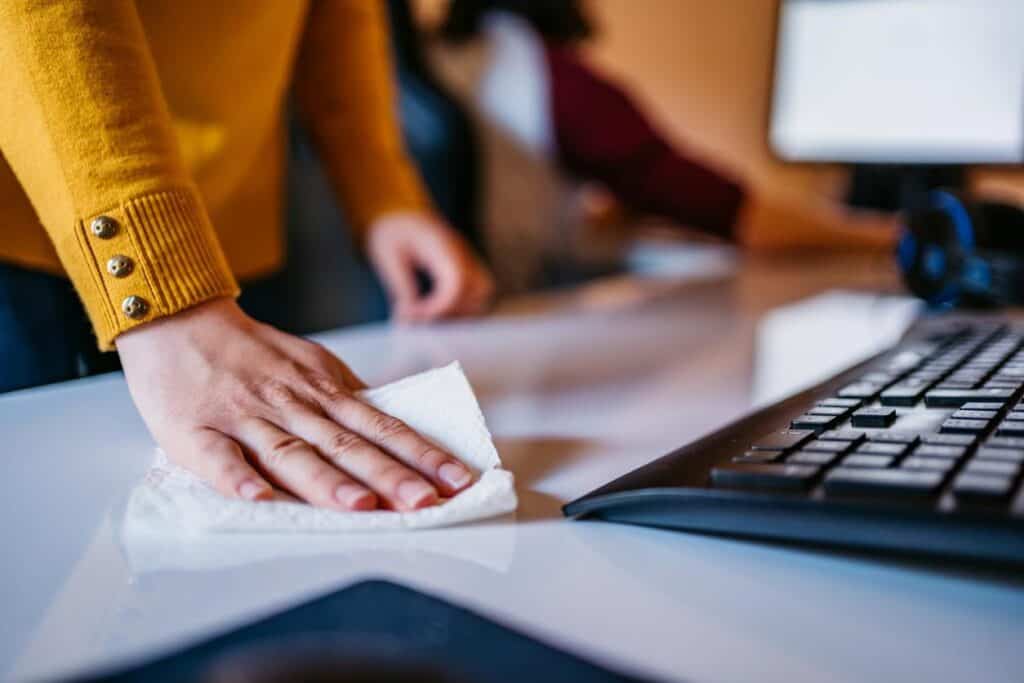
Don’t neglect high-touch surfaces that may harbour germs, such as door handles, keyboards, and phones.
In order to provide a hygienic workplace, it is imperative to regularly clean and sanitise high-touch surfaces. Light switches, phones, door handles, keyboards, EFTPOS machines, etc. should be cleaned daily if possible. This will prevent the spread of germs in the workplace.
Don’t use abrasive cleaning tools on delicate surfaces, which can cause damage
Cleaning is supposed to improve the appearance of your workplace. Using abrasive products can cause physical damage to surfaces and pose health risks to your employees. Consider using non-caustic, environmentally friendly products like the Jim’s Cleaning range.
Don’t use cleaning products near food preparation areas that can contaminate food
It’s important you only use products that are marked as ‘food grade’ around food preparation areas. Ensure you provide ample clean cloths/sponges.
Don’t ignore safety precautions, such as using gloves and protective gear when necessary
Be sure you provide your employees with the appropriate personal protective equipment to keep them safe at all times when cleaning around work.